



Links

What can I do if I experience discrimination, harassment, threats, or violence?
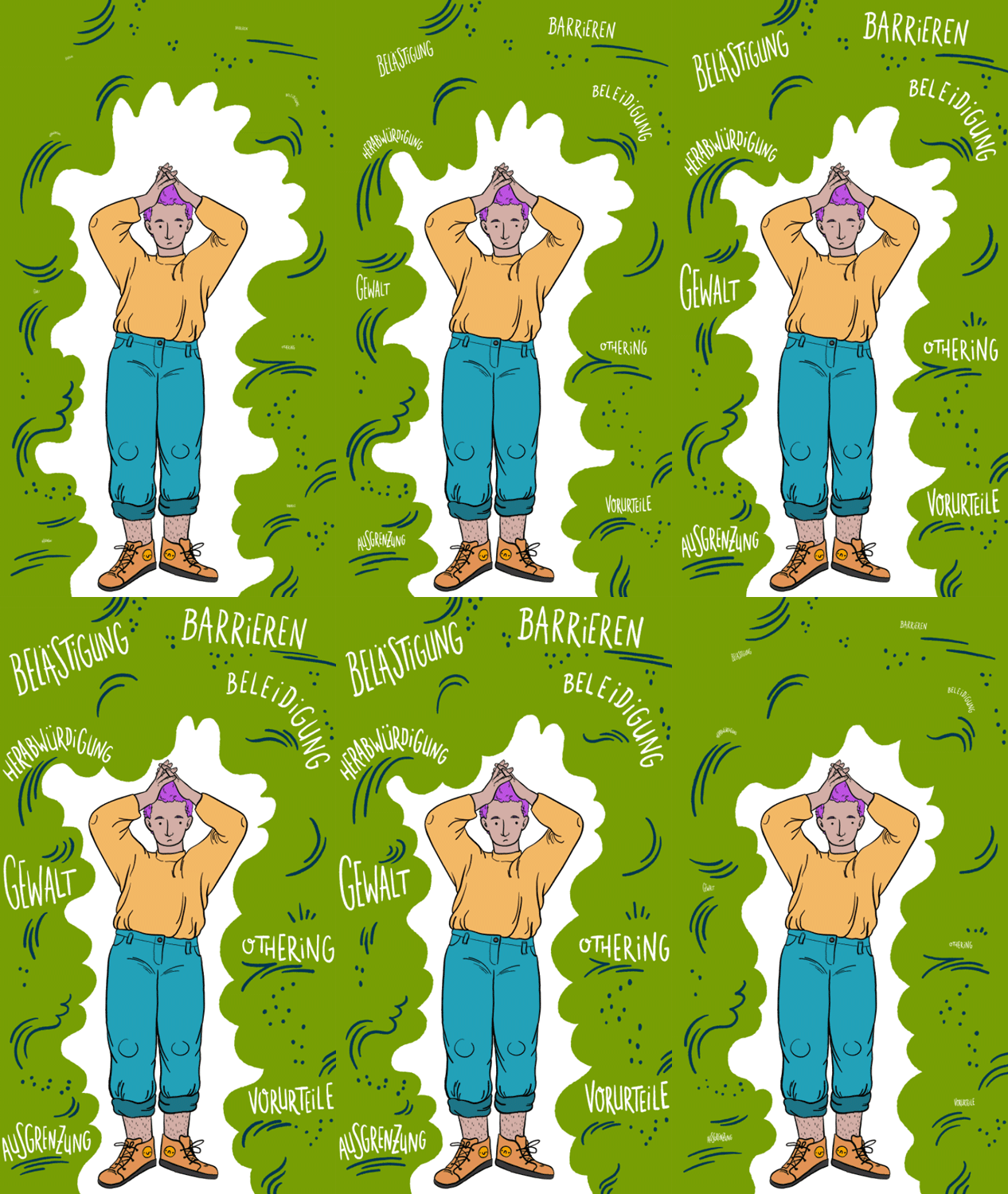
When a person is confronted with a situation that is discriminatory, abusive, threatening, or violent, they can quickly feel helpless and overwhelmed. This page therefore provides some useful tips that may be helpful for those affected in the situation itself, immediately after it, and in the period that follows.
Since the spectrum of discriminatory, abusive, threatening, and violent situations in a university context is very broad, not all of the following recommendations may be applicable to every situation.
Translated with DeepL.com (free version)

▸ In the situation
Disagree!
Tell the person who is behaving inappropriately toward you that their behavior is unwanted and inappropriate, and explain what response you expect—for example, by asking them to stop the behavior and demanding an apology.
Possible phrases include:
- “That’s too personal for me; I won’t answer that. “Please don’t ask me such inappropriate questions.”
- “I find your statement discriminatory and would like you to apologize to me.”
- “This statement may have been meant as a joke, but it was discriminatory and demeaning. There is nothing funny about it, and such statements will not be tolerated at our university.”
- “Your behavior violates the university’s anti-discrimination policy; please stop.”
- “I feel very uncomfortable in this situation and find your behavior unprofessional. I’m going to leave now.”
If the behavior goes unchallenged, there is a higher risk that the person will continue or even escalate it in the future. If, on the other hand, the person is confronted, there is a higher chance that they will critically reflect on their behavior and refrain from it in the future—especially if the person had no intention of demeaning others through their actions. In doing so, try to criticize the person’s behavior and not the person as a whole. The statement “Your comment was racist” triggers fewer defense mechanisms than the statement “You are a racist” and increases the likelihood that the other person will be able to accept the criticism.
If you are unable to address the inappropriate behavior in the moment, you can do so later, for example in writing (provided you have the person’s contact information).
Document the incident!
Documenting the incident can be very helpful for future steps. For example, you can write down threatening statements, take a photo of discriminatory graffiti, or take a screenshot of a harassing chat message on your smartphone.
Talk to the people present!
Are you not alone with the perpetrator? Take advantage of this! Make bystanders aware of your situation. They can support you. Talk to people who can witness the situation and ask for their contact details so that you can reach them if you need their statements later. You can also alert any staff members or the police.
Leave the situation!
Leave situations that you perceive as threatening as quickly as possible and without having to justify your departure. Do not force yourself to endure situations that you feel are not good for you. It does not have to become dangerous for you to have the right to leave. Your own safety should always be a priority. This also applies to digital spaces.
Important notes:
If you were unable to respond in any of the ways mentioned above during the situation, this is not unusual and is nothing to be ashamed of or feel guilty about. Such situations are extremely stressful, and those affected often feel caught off guard, overwhelmed, helpless, or frozen.
We all frequently overestimate our ability to react, which is why we are disappointed in ourselves afterward. A quick-witted response often only comes to mind once the situation is long over. Don’t be hard on yourself. You reacted as well as you possibly could in that moment.
In addition, you should always make sure not to put yourself in danger. If the other person seems aggressive to you, it’s better to leave the situation as quickly as possible than to argue back loudly.
▸ Right after the situation
Get to safety!
Especially if you found the situation very stressful and/or threatening, you should go to a safe place as soon as possible. It’s also very helpful not to be alone after such a situation. Avoid isolated places and instead go to places where other people are.
Contact someone you trust and talk to them about what happened. Share only what you feel comfortable sharing. You can also simply ask your trusted person to be there for you and let them distract you.
Your trusted person might also feel overwhelmed when they hear what happened to you and may not know how best to support you. So, if possible, ask for specific things. Here are some examples of what you could say:
- “I just want to zone out right now. Can we watch a movie together?”
- “I want to get everything off my chest. Can you just listen?”
- “I can’t really talk about it yet. Could you maybe just give me a hug?”
Document what happened!
Incident Report
As soon as possible, prepare an incident report to document what happened as accurately as possible. This is very important for any potential next steps—even if you’re not yet sure whether you want to take further action.
Write down all the facts that come to mind: the date, the time, the location, the people involved (if their names are unknown, you can describe them), who said what, and who did what.
You can decide later whether, for example, you want to file a complaint with the university or report the incident to the police. However, your memories are so fresh immediately after the incident that it makes the most sense to write them down right away. If you decide after some time to file a complaint or report the incident, your memory may have already faded, and important details may no longer be as clear, which makes it harder to pursue disciplinary action.
You can use our template for the memorandum. You can either fill out and save the PDF file digitally or print out the file and fill it out by hand.
Gedaechtnisprotokoll.pdf (internal only)
(184.2 KB) vom 16.02.2026
Evidence
Preserve evidence—for example, screenshots of emails or chat histories, or photos of damage to property, injuries or stains on your clothing. On the HateAid website , you can find a helpful guide on how to take legally compliant screenshots.
Even though you will certainly not feel like doing so after a physical attack or assault, it can be extremely important to secure injuries, stains, damage, and traces as evidence. You should do this before washing yourself or your clothing, as important traces may be lost. At the forensic medicine clinic of Halle University Hospital , injuries sustained by victims of violence and traces on the body and clothing can be documented in a “court-admissible” manner by specialized medical staff—regardless of whether a report has been filed with the police and free of charge. In addition, assessments of injuries, forensic evidence collection, and sampling for chemical-toxicological examinations can also be carried out (for example, if you suspect that you have been given knockout drops). The medical staff examining you are bound by confidentiality. No information will be disclosed against your will. The findings will be kept on file and can be used as evidence later if you decide to file a report.
Take yourself seriously!
Take yourself and your feelings seriously. However you feel, it is justified, even if you feel differently than you expected or are used to feeling. Do not blame yourself. It is not your fault if someone discriminates against you, harasses you, threatens you, or uses violence against you—regardless of what you were wearing or whether you were intoxicated, for example. Be aware that there are people in your private life and professional circles who can support you. You don't have to deal with this situation alone.
There may be many reasons why you doubt whether what happened to you was really discrimination, harassment, or violence, for example because the person who discriminated against you or assaulted you is someone close to you whom you care about. However, discrimination, sexual assault, and violence can also occur in close relationships. Studies show that a large proportion of sexual assault is committed by people in the victim's private or family circle, such as current or former partners. Even people you respect, like, or are in a relationship with have no right to cross your boundaries!
Are you unsure whether what you experienced was discrimination/ harassment/ violence?
If you felt uncomfortable, suddenly very insecure, treated disrespectfully, humiliated, threatened, intimidated, and/or cornered, felt that you could not safely set your own boundaries, felt ashamed or defiled, and felt that your dignity had been violated, these are clear indications that you have experienced discrimination and/or an assault or attack.
The following questions may help you assess the situation:
- Was the other person's behavior appropriate for your relationship—for example, did the person behave appropriately for a friend/lecturer/supervisor/stranger?
- Were you treated the same as other people in similar situations?
- Did the other person seem genuinely interested in how you were feeling in the situation? Did the person ask how you were feeling with genuine concern?
- Did the person obtain your consent before any physical contact, sexual activity, or the use of mind-altering substances such as alcohol or drugs took place?
- Did you signal your boundaries and were they respected?
If you can answer “no” to some or all of these questions, these are clear indications that you may have experienced discrimination and/or sexual assault.
▸ In the time after
It's not unusual to be feeling bad right now!
The consequences of discrimination, harassment, threats, and violence for those affected are individual and depend on what has happened. However, it is always a stressful experience that can take a lot of energy and also affect a person's ability to study and work. Possible consequences include:
- Feeling bad, humiliated, helpless, and/or powerless
- Feeling detached
- feeling insecure
- worrying about negative consequences, disbelief, or a lack of understanding when telling others what happened
- In particularly serious cases, memory gaps may occur as the mind protects itself from highly stressful traumatic events
- blaming oneself for what happened
- Disappointment that you did not defend yourself sufficiently (people often underestimate how difficult it can be to defend themselves in an acute situation)
- Relativizing the transgression you experienced as your own excessive sensitivity
It can therefore be very difficult to confide in others. Those affected tend to keep quiet about what they have experienced and avoid further situations of this kind as inconspicuously as possible. For example, out of concern that they may encounter the harassing/discriminatory/violent person again, affected students may avoid classes and exams and consider changing supervisors, subjects, or universities. However, this has an impact on their studies and usually leads to a delay in graduation.
The taboo surrounding what has happened means that the people who have behaved in a discriminatory/harassing/violent manner remain invisible and are not confronted with the consequences of their actions. This can sometimes lead to them being completely unaware of how inappropriate their behavior is.
For those affected, however, the experience can have stressful consequences that are not necessarily temporary, for example:
- Sleep disorders, nightmares
- Permanent inner restlessness
- Always having to think about what happened
- Feeling sick
- Headaches and stomach aches, nausea, digestive problems, palpitations, sweating, trembling, permanent colds, diffuse pain
- Fears and feelings of threat
- Reduced self-confidence
- Feelings of sadness, disgust, anger
- Distrust, nervousness, irritability
- Difficulty concentrating
- Fatigue and listlessness
- Lower performance, poorer results in studies/at work
- Withdrawal from social activities, isolation
- Distraction through increased activity and increased consumption of alcohol or drugs
Depending on the severity of the experience, it can also lead to long-term stress, trauma (possibly with dissociation and flashbacks), mental and physical illness (e.g., depression, anxiety disorders, eating disorders, self-harming behavior), as well as dropping out of school or losing one's job, especially if the experience could not be processed with the help of appropriate support.
Be mindful of yourself!
It is particularly important to take good care of yourself when you experience stressful consequences of what you have been through. Psychological injuries also need time to heal, and it is normal to feel less resilient at first. No one would expect a person with a broken leg to run a marathon. Psychological injuries are often more difficult to recognize because they are not immediately visible, but they can have just as serious consequences.
The following things, among others, can be helpful in processing what has happened:
- Consciously and increasingly do things that are good for you—e.g., listen to your favorite music, pursue a hobby, or spend time with animals.
- Be kind to yourself: Something very stressful has happened to you through no fault of your own, and it is okay if you are not functioning like a machine. Try to treat yourself as you would treat a good friend who has had something bad happen to them.
- Allow yourself some rest to regain your strength. Try to get enough sleep. Breathing exercises and meditation can also be helpful. If you are not feeling well and find it difficult to concentrate, you can also ask your family doctor to write you a sick note.
- In addition to getting enough rest and relaxation, it can also be very helpful to engage in physical activity. For example, you can take a self-assertion or self-defense course or participate in other forms of exercise. It is also worth taking a look at the courses offered by the University Sports Center.
You don't have to go through this alone!
Especially when stressful consequences of the experience arise, it is very important not to remain alone with what has happened, but to seek support. The following things, among others, can be helpful in processing what has happened:
- Seek support or companionship in everyday life (e.g., from friends).
- Visit a specialist counseling or support center—there are both university and non-university centers that offer free and confidential support. It is usually also possible to receive anonymous counseling if you wish. Our overview will help you find a counseling and support center that suits your situation.
- Network and exchange ideas with people who have had similar experiences (e.g., in a self-help or activist group): With these people, you can experience in an understanding, protected space that you are not alone – neither with what you have had to go through, nor with your feelings and thoughts. You can support each other on an equal footing, share in the wealth of experience of like-minded people, and practice future responses.
- Seek professional therapeutic support to process what you have experienced. This is especially useful if you are suffering from the stressful consequences of your experience. There are usually behavioral, depth psychological, or psychoanalytic therapies available. Some therapists also specialize in body-oriented or trauma therapy. You can arrange one or more trial sessions to start with. Most health insurance companies cover the full cost of psychotherapy if certain conditions are met.
- Victims of violent crimes have the option of seeking psychotherapeutic help at the trauma clinic of the university hospital shortly after a recent violent crime. Under the Victims Compensation Act, short-term psychotherapeutic first aid is offered in order to prevent long-term psychological consequences through early intervention. The aim of the initial five individual psychological consultations is to identify psychological stress as a possible consequence of a crime at an early stage, to classify it diagnostically, and to carry out initial stabilizing interventions. This is intended to help those affected to cope with what they have experienced. If further treatment is required after this, additional psychotherapeutic consultations can be carried out as a form of early intervention.
You can take action against what you have experienced!
You can take action and work to ensure that what happened to you does not happen again in the future, for example by taking the following measures:
- Get actively involved in the fight against (sexualized) discrimination—for example, by joining an existing group or starting a new one.
- File a complaint against the perpetrator with the university, thereby initiating an official complaint procedure. Before filing a complaint, it is advisable to make an appointment with a confidential university counseling service. They can inform you about procedural processes and the possible consequences thereof.
- Report the incident to the police or public prosecutor's office in person or in writing and, if necessary, file a criminal complaint. This can deter perpetrators and, in the best case, lead to their punishment, as well as ensuring that what happened to you is included in police statistics.
- However, it should be noted that a person who is reported usually finds out who reported them. You are not obliged to file a report. In some cases, the police must investigate even without a report being filed—for example, in cases of dangerous bodily harm. You are not usually obliged to make a statement to the police unless it is equivalent to a summons from the public prosecutor's office.
The illustrations on this website were created by Louie Läuger as part of the HRK' 'Diversity at German universities initiative' and was funded by the Federal Ministry of Education and Research (BMBF) under grant number 01FP22V01.